Handmade · Brooklyn, New York
The pot that does the work.
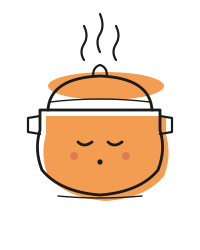 that does the work.
A wheel-thrown clay pot rooted in Cantonese claypot rice tradition — built for slow heat, locked steam, and cooking that takes time. Made to order in Brooklyn.
Shop the claypot →What is a claypot?
A claypot is an unglazed or partially glazed earthenware vessel used across South and East Asia for thousands of years. In the Cantonese kitchen it's called 沙煲 — a sand pot — and it's the foundation of 煲仔飯: ingredients cooked together over an open flame until the bottom crust crackles and catches.
Unlike a Dutch oven or cast iron, a claypot is porous. It breathes. As it heats, the walls absorb and release moisture from the food itself, creating a gentler, more even cook. Heat builds slowly, flavor concentrates, and steam cycles back onto whatever is inside. Over time the pot darkens and develops a patina — a record of every meal it's held.
Why cook with one
Even heat
Clay distributes heat slowly and steadily, eliminating hot spots and giving a gentle, consistent cook from edge to center.
Locked-in moisture
The domed lid creates a self-basting cycle — steam rises, condenses, and drips back. Rice never dries out. Braises stay glossy.
Mineral character
Unglazed clay imparts a faint earthiness to what you cook — subtle, not muddy. Old pots absorb the flavor of past meals.
Patina with use
Each use darkens and seasons the pot. A well-used clay pot is proof of good cooking — it only gets better.
How yours is made
Fill out the form
Tell me what you're after — how many people you usually cook for, what kind of food, and whether you have anything in mind visually.
We'll talk
I'll follow up and we'll work through size, glaze direction, and function. Half design conversation, half talking about what you're going to cook in it.
Deposit, then clay
A deposit locks in your place in the queue. After that the clay comes out and the real work starts.
Six to eight weeks of making
Base and lid get thrown, dried, trimmed, bisque-fired, sanded, glazed, and fired again. Progress photos along the way.
Done. Cook something.
Your pot arrives ready to season and use. The first meal is yours to decide.
Three easy recipes
Claypot rice
The original use — rice and toppings cooked until the bottom crackles.
Ingredients
- 2 cups jasmine rice
- 2½ cups water
- Lapcheung (Chinese sausage), sliced
- Chinese bacon, sliced
- Pickled vegetables
- Soy sauce + dark soy sauce
- Sugar, salt, MSG to taste
Method
- Rinse rice and add to pot with water and your toppings.
- Bring to a boil over medium-high heat, then lid on and reduce to low.
- Cook 12–15 minutes. Check by smell and sound — a faint crackle, not a burn.
- Mix soy sauce, dark soy, a pinch of sugar, salt, and MSG. Pour over and serve straight from the pot.
Miso mushroom hot pot
Umami-forward broth with earthy mushrooms — the claypot holds heat at the table.
Ingredients
- 4 cups dashi or water
- 3 tbsp white miso
- Mixed mushrooms (shiitake, enoki, king oyster)
- Tofu, sliced
- Green onion, sesame oil to finish
Method
- Bring dashi to a simmer in the pot. Whisk in miso until dissolved.
- Add mushrooms and tofu. Cook 5–8 minutes on low.
- Finish with sliced green onion and a drizzle of sesame oil. Bring the pot straight to the table.
Soy-braised kabocha
Sweet squash, soy, and ginger — low and slow in clay until it collapses into itself.
Ingredients
- ½ kabocha squash, cut into wedges
- 3 tbsp soy sauce
- 1 tbsp dark soy sauce
- 1 tbsp mirin or sugar
- 1 cup water or dashi
- 3 slices fresh ginger
Method
- Combine soy sauces, mirin, water, and ginger in the pot. Bring to a simmer.
- Add kabocha wedges skin-side up. Cover and braise on low 20–25 minutes.
- Flip, cook uncovered 5 more minutes to reduce the glaze. Serve from the pot.
Care + first use
- Rinse before every use — a brief rinse keeps the pores clear.
- Soak for 30 minutes before first use by submerging fully in cold water.
- Season with rice porridge: fill halfway with water and a handful of rice, simmer on low 30 minutes, let cool, then discard.
- Hand-wash only — no dishwasher, no soap. Rinse with hot water and let air dry completely before storing.
- Never thermal-shock the pot — always start on low heat and warm up gradually. No cold water into a hot pot.